
Monoclonal gammopathy
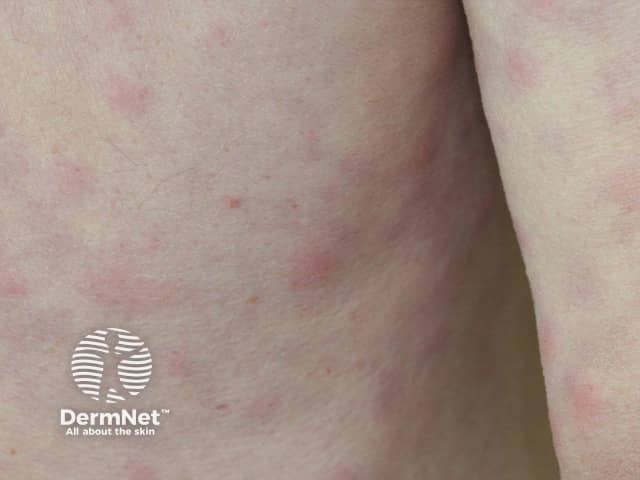
Schnitzler syndrome is an autoinflammatory disease characterized by chronic, nonpruritic urticaria in association with monoclonal gammopathy. Associated sympoms include recurrent fever, bone pain and arthralgia or arthritis. The gammonpathy is most often of the immunoglobulin M (IgM) subtype; those with an immunoglobulin G (IgG) monoclonal gammopathy are considered to be a distinct group.. Approximately 10-15% of patients eventually develop a lymphoproliferative disorder, such as lymphoplasmacytic lymphoma, Waldenström macroglobulinemia, or IgM myeloma. See the image below.
Rash of Schnitzler syndrome. Courtesy of DermNet New Zealand (https://www.dermnetnz.org/assets/Uploads/systemic/schnitzler.jpg).
The diagnosis of Schnitzler syndrome is made by using the Strausborg criteria [1] :
Major criteria:
Recurrent urticarial eruption
Monoclonal gammopathy. Titers may be low (< 10 g/L).
Minor criteria:
Recurrent fever - present in ~ 90%
Elevated C-reactive protein (CRP) and/or erythrocyte sedimentation rate (ESR)
Leukocytosis
Skin biopsy showing a neutrophilic infiltrate without vasculitis
Evidence of abnormal bone remodeling with or without bone pain ( abnormal MRI, elevated bone alkaline phosphatase or bone scintigraphy)
For a definitive diagnosis:
2 major and 2 minor criteria if the monoclonal gammopathy is IgM.