Psoriatic arthropathy
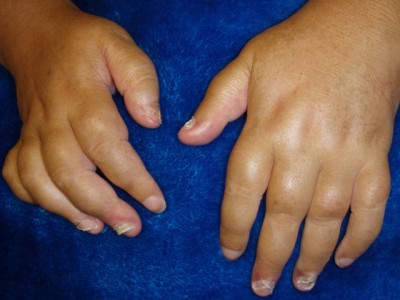
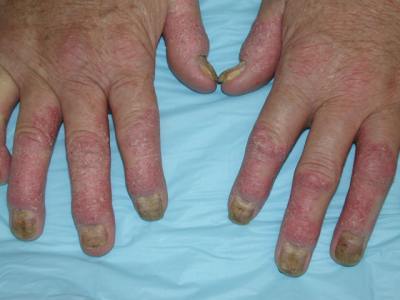
Psoriatic arthropathy is an inflammatory arthritis associated with psoriasis and is classed as one of the seronegative spondyloarthropathies. It correlates poorly with cutaneous psoriasis and often precedes the development of skin lesions. Around 10-20% of patients with skin lesions develop an arthropathy, with males and females being equally affected.
Presentation
Patterns
- 80% will have preceding psoriasis
- symmetric polyarthritis
- very similar to rheumatoid arthritis
- 30-40% of cases, most common type
- asymmetrical oligoarthritis: typically affects hands and feet (20-30%)
- historically thought to be the most common type, based on older data (e.g. 1973 Moll and Wright), though more recent studies suggest symmetric polyarthritis may now be more prevalent
- sacroiliitis
- arthritis mutilans: a severe deforming form with 'telescoping fingers'
- peripheral arthritis may be deforming
Other signs
Investigation and Management
Bloods
- CRP/ESR typically elevated due to inflammation
- Possible elevated uric acid due to skin turnover
- as a seronegative spondyloarthropathy, rheumatoid factor (RF) and anti-cyclic citrullinated peptide antibodies (anti-CCP) are usually negative
- HLA-B27 may be positive, particularly in patients with axial involvement