👋 Hey, I’m Lenny and welcome to a 🔒 subscriber-only edition 🔒 of my weekly newsletter. Each week I tackle reader questions about product, growth, working with humans, and anything else that’s stressing you out about work. Send me your questions and in return I’ll humbly offer actionable real-talk advice.
Convincing people to get into the car of, send money to, or meet, a complete stranger is a hard problem, rooted in our evolution.
“Throughout human history, we have distrusted people outside our clan, our tribe. We believe strangers will do us harm. Why? In deep time, hominids outside the family group were likely to be a raiding party.” —Gordon H. Orians
A lack of trust is why many marketplaces have struggled (e.g. Couchsurfing) and why those that cracked the trust problem (e.g. Airbnb) have gone on to do exceptionally well.
To give you a comprehensive answer, I got in touch with the founders and early growth leaders at a dozen of today’s most successful marketplaces, including Lyft, Thumbtack, Rover, Shef, Peerspace, Snackpass, Good Dog, and Udemy, and asked them what they found to be the most effective way to build trust in their marketplace early on. I was surprised by the variety of answers. I was expecting to hear “reviews” and maybe a couple of other tactics. Instead I found six effective ways to build trust in a new marketplace:
Let’s explore each in a bit more depth.
Thank you to Alvin Salehi (Shef), Archie Abrams (Udemy), Evan Goldin (Lyft), Lauren McDevitt (Good Dog), Matt Bendett (Peerspace), Kevin Tan (Snackpass), Philip Kimmey (Rover), and Sander Daniels (Thumbtack) for sharing their insights with me for this post 🙏
Reviews, as expected, were the most frequently cited strategy for building trust. They’re essentially table stakes these days.
Here’s Joe Gebbia (co-founder of Airbnb) talking about the power of reviews for Airbnb’s early success (~90 seconds long):
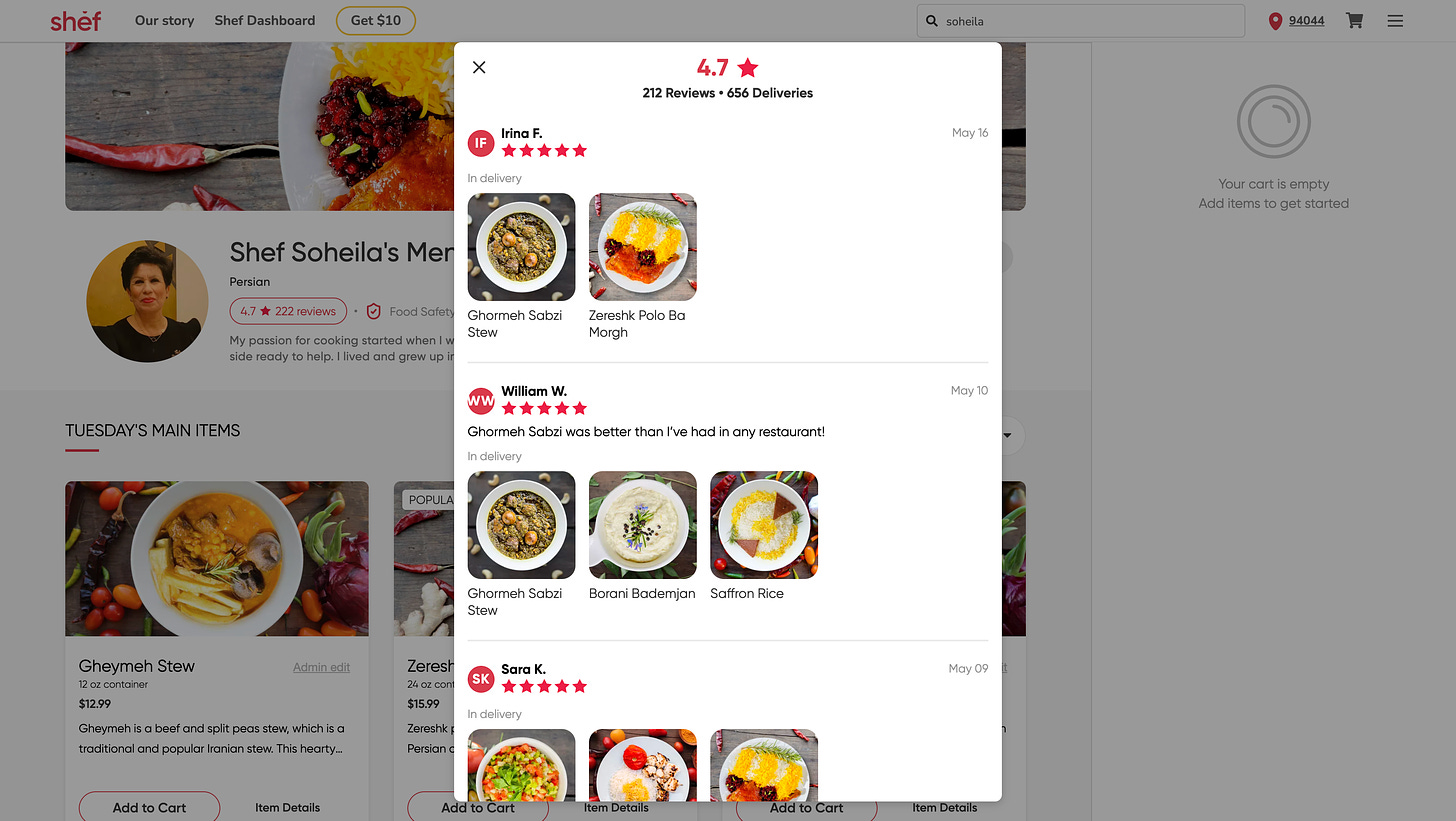
Alvin Salehi (co-founder of Shef) shared a similar lesson:
“For the longest time, we only had star ratings on our platform. But we found that ratings alone weren’t enough to help customers make efficient decisions. As a result, we also began publishing full text reviews and photos of the dishes that were being reviewed to help customers avoid the paradox of choice and make well-informed decisions more quickly, which has had a positive impact on acquisition and retention.”