![Create Stunning AI Product Photo with Adobe Firefly [ FREE Method ] - YouTube](https://substackcdn.com/image/fetch/$s_!VxNB!,w_1456,c_limit,f_auto,q_auto:good,fl_progressive:steep/https%3A%2F%2Fsubstack-post-media.s3.amazonaws.com%2Fpublic%2Fimages%2F2818bffc-0a16-4fff-a414-784303011fb5_686x386.jpeg)
In Start Here: Product Visualization for 3D Artists, we introduced the basics of product visualization. In Deep Dive 1, we covered CAD. In Deep Dive 2, we looked at NVIDIA’s move into CPG digital twins. In Deep Dive 3, we talked about packaging. In Deep Dive 4, we mapped out the systems that manage your work. And in Deep Dive 5, we focused on scalability…the metric that every company ultimately cares about.
This week, we’re going to look ahead.
Because beyond all the immediate value 3D artists provide (faster workflows, scalable content, automation) there’s a bigger play happening: future-proofing.
I’m not going to sit here and tell you I know exactly what the future looks like. Nobody does. Not the Metaverse folks, not the XR evangelists…none of us.
But there are a few safe bets.
First, AI…for all its potential…cannot consistently or predictably generate pixel-perfect replicas of real-world products (No many how many fancy sizzle reels the tech bros throw up on LinkedIn.) That means any company that cares about accuracy, consistency, or brand fidelity will need 3D workflows to visualize their products.
Second, e-commerce and marketing are in constant motion. We don’t know exactly what the next big experience will be, but we do know that consumers want more realism and more confidence before they buy. And that’s where 3D becomes essential.
Let’s start with something very simple: product returns are insanely expensive.
Amazon’s “free returns” policy rewired consumer expectations, forcing nearly every other retailer to follow. But “free” doesn’t mean costless. Every return eats into profit margins through logistics, labor, and lost sales.
The best way to reduce returns? Help customers know exactly what they’re buying.
That means giving them not just beautiful product shots, but interactive, contextual information…how the object looks, how it fits, how big it is, how it lives in their space.
We’re already seeing two clear trends here.
1. AR Product Previews (Here Now)
If you’ve shopped for furniture lately, you’ve probably seen this: tap a button on a site like Amazon, and your phone scans your space and drops a 3D model of the product into it.
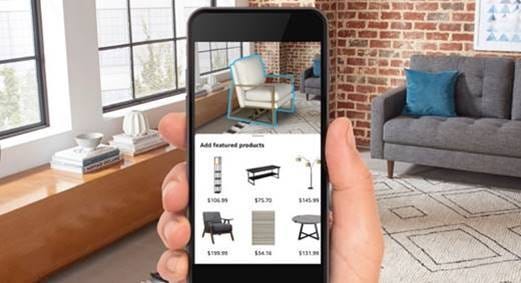
That’s not a gimmick. It’s conversion optimization. It gives buyers confidence and significantly reduces returns. And if you think returns are expensive on shirts and shoes…imagine couches and bookshelves.