
In today’s highly competitive digital landscape, businesses are constantly searching for smarter ways to stay ahead. Understanding what your competitors are doing, especially in advertising, can provide valuable insights into trends, strategies, and audience targeting. One powerful tool that marketers often explore is the Meta Ad Library. It offers transparency into active ads across platforms, helping brands analyze competitor campaigns effectively. But the real question remains: can it truly help you track competitors and refine your own marketing approach?
The Meta Ad Library is a publicly accessible database that allows users to view ads currently running across Meta platforms like Facebook and Instagram. By simply searching for a competitor’s brand name, you can uncover their active campaigns, messaging styles, and creative formats. This enables businesses to evaluate what works and what doesn’t within their industry.
With the meta ad library, marketers can identify patterns such as frequently used visuals, tone of communication, and promotional strategies. For instance, if a competitor consistently runs video ads, it may indicate higher engagement rates for that format. Similarly, analyzing ad copy can reveal how brands position their products or services to appeal to their target audience.
Another advantage is the ability to monitor seasonal trends. You can see how competitors adjust campaigns during holidays or special events, helping you plan your own strategies more effectively. By refining your approach with facebook ad targeting, you can better align your campaigns with audience behavior. Overall, it acts as a real-time window into your competitors’ advertising playbook.
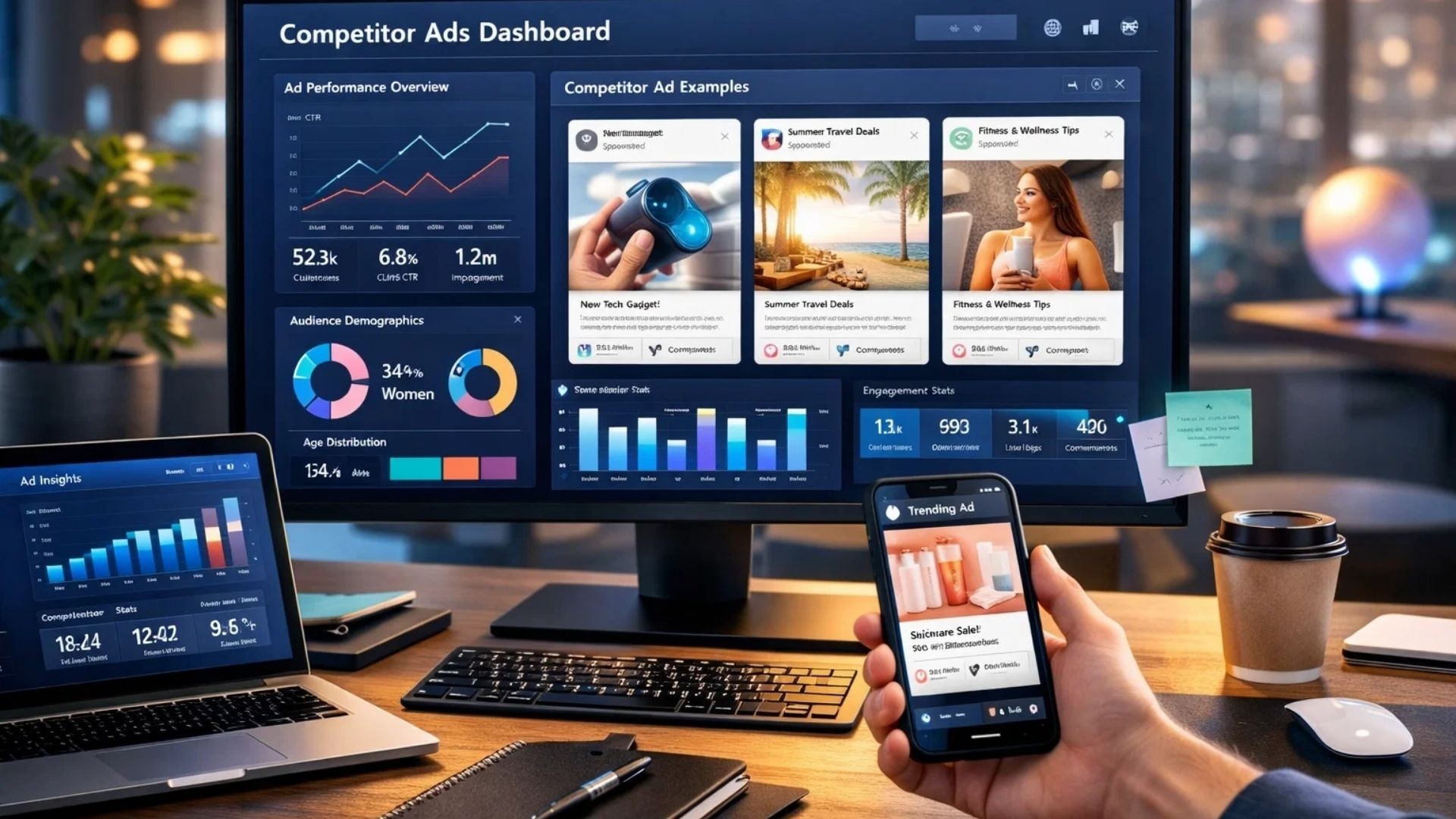
Tracking competitor ads is not just about curiosity; it’s about gaining actionable insights. One major benefit is inspiration. By reviewing successful campaigns, you can generate ideas for your own ads while maintaining originality.
Another benefit is understanding audience engagement. If certain ads appear repeatedly, it often indicates they are performing well. This can guide you in crafting campaigns that resonate with similar audiences. Additionally, you can observe the frequency of ads, which helps estimate how aggressively competitors are investing in advertising.
It also supports better decision-making. Instead of guessing what might work, you rely on observable data from competitors already testing the market. This reduces trial-and-error and improves campaign efficiency over time.
While the Meta Ad Library is powerful, it is not without limitations. It does not provide performance metrics such as click-through rates, conversions, or ROI. This means you can see what ads are running but not exactly how well they are performing.
Another limitation is the lack of targeting data. You won’t know the exact audience segments your competitors are targeting, which can make it harder to replicate their success precisely. Additionally, some smaller or less active campaigns may not appear prominently, giving an incomplete picture of a competitor’s overall strategy.
Despite these drawbacks, the tool still offers valuable qualitative insights that can shape your marketing decisions when used alongside other analytics tools, especially when leveraging the fb ad library for deeper competitor research and ad inspiration.

To get the most out of this tool, consistency is key. Regularly monitoring competitor ads helps you stay updated on changes in their strategies. Create a tracking system where you note patterns, ad formats, and messaging styles over time.
Focus on trends rather than copying individual ads. Look for recurring themes that indicate success, such as storytelling techniques or specific offers. Combine these insights with your own brand identity to create unique campaigns.
Additionally, pair your findings with other tools like analytics platforms and customer feedback. This holistic approach ensures you’re not relying solely on visible ads but also on measurable performance data.