
A Lot at Tools, Tech, and Workflow Shifts through the centuries
Before we dive headfirst into the future of digital fashion, let’s take a moment to zoom out. If you’re coming from any other discipline and just stepping into fashion, it can feel like a totally different planet. But just like product visualization, this space is going through a massive evolution and it helps to understand how we got here.
This article is your crash course in how fashion workflows have changed over time, especially when it comes to the tools and technologies behind the scenes. Spoiler: we’ve come a long way from pencil sketches and pattern paper. And every big tech shift (whether it was Illustrator or CLO) changed not just how garments were made, but who could make them, how fast, and with what level of precision.
We’ll walk through the key turning points in this history so you can better understand where things are heading next and why your 3D skills are so relevant in this space.
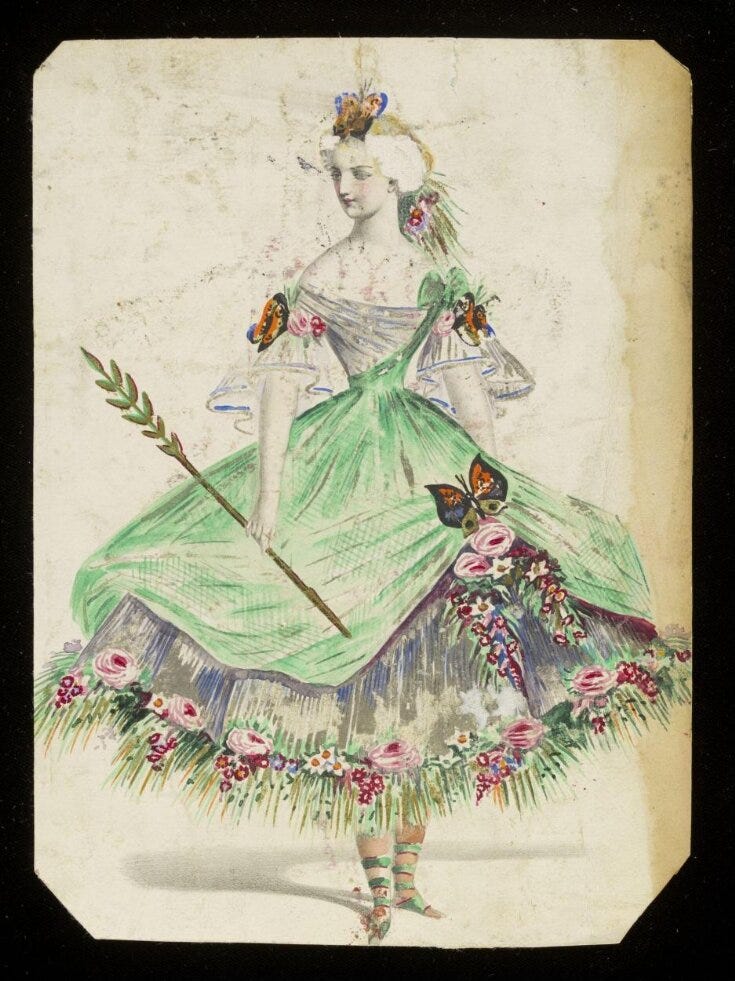
Before digital anything, fashion design was pencil-on-paper. Actually, scratch that…it was pencil, chalk, charcoal, ink, gouache, whatever medium a designer could use to quickly express a vision. For centuries, fashion illustration was the primary method for capturing style, shape, and intent. These drawings weren’t just notes to a tailor, they were works of art in themselves, often celebrated as part of the creative process.
Think about the fashion houses of Paris in the 1800s. Couture designs from that era were drawn by hand, sent to clients, and reviewed on paper before a single stitch was made. Designers like Charles Frederick Worth, often considered the father of haute couture, set the standard by sketching elaborate gowns that were then hand-crafted in his atelier. These sketches communicated mood, movement, texture and they had to be strong enough to win over clients who wouldn’t see the final piece until much later.
Sketch by Charles Frederick Worth
Moving into the early 20th century, fashion illustration became a booming industry. Designers like Jeanne Lanvin and Paul Poiret developed distinct visual styles in their sketches, and illustrators themselves (people like René Gruau and Erté) became well-known in their own right. Fashion magazines like Vogue and Harper’s Bazaar didn’t run photography spreads like modern fashion magazines. They ran full-page illustrations that helped shape entire trends. The fashion sketch was both a marketing and a manufacturing blueprint.
Design by Jeanne Lanvin

Back in the workrooms, the people translating these sketches into garments relied entirely on skill, training, and experience. Draping muslin on a mannequin, hand-cutting patterns, and sewing test garments by feel. This was couture as craft. Every change meant going back to the mannequin or redrawing a piece of the pattern.
Inside large fashion houses, everything was done in-house. Designers, patternmakers, sample makers, tailors—all working under one roof, constantly iterating. It was fast-paced but hyper-local. You could get things done quickly, not because the process was automated, but because the whole team was right there in the same building. Corrections were made in real-time, fittings happened face-to-face, and the only delay was the time it took for a human hand to move.
If you want to see what those sketches looked like, go browse some of the Dior archives or take a look at illustrations from Balenciaga, Christian Lacroix, or early Karl Lagerfeld collections. They weren’t just technical. They were dramatic, full of attitude and motion.
Sketches by Christian Lacroix

Even as photography entered the scene and magazines shifted toward more realism, sketches stayed relevant, especially in the studio. That’s because illustration is fast. It’s iterative. And unlike a photo, it leaves room for imagination. You’re not just seeing what a dress looks like. You’re seeing what it could feel like.