Virtual Style Inside Games
Last week, I talked about virtual try-on and why I’ve started to de-emphasize it as the “holy grail” application of 3D in fashion in a Realtime environment.
That shift surprised me, because for a long time virtual try-on felt inevitable. Garments already exist in 3D. Brands want to reduce returns. Customers want confidence. The logic seems airtight.
But after spending more time inside real fashion workflows and going deeper into real-time rendering and interactive systems, I’ve come to a different conclusion: anything short of true photorealism doesn’t meaningfully outperform a high-quality photo or a well-crafted digital twin when it comes to purchase confidence. And the gap between where mobile real-time tech is today and where it would need to be to fully close that loop is still massive.
What has caught my attention over the last few years, though, is something else entirely. It’s quieter. Less talked about in traditional fashion circles. And already delivering real value at real scale.
Fashion inside games.
Not as a speculative metaverse future. Not as NFTs-first nonsense. But as a functioning, revenue-generating ecosystem that millions of people already care deeply about.
If you’re not a gamer, it’s easy to underestimate how large and culturally important platforms like Fortnite, Roblox, and Minecraft actually are.
These aren’t niche experiences. They’re massive, social, identity-driven worlds where self-expression matters and clothing and skins are one of the primary ways people express themselves.
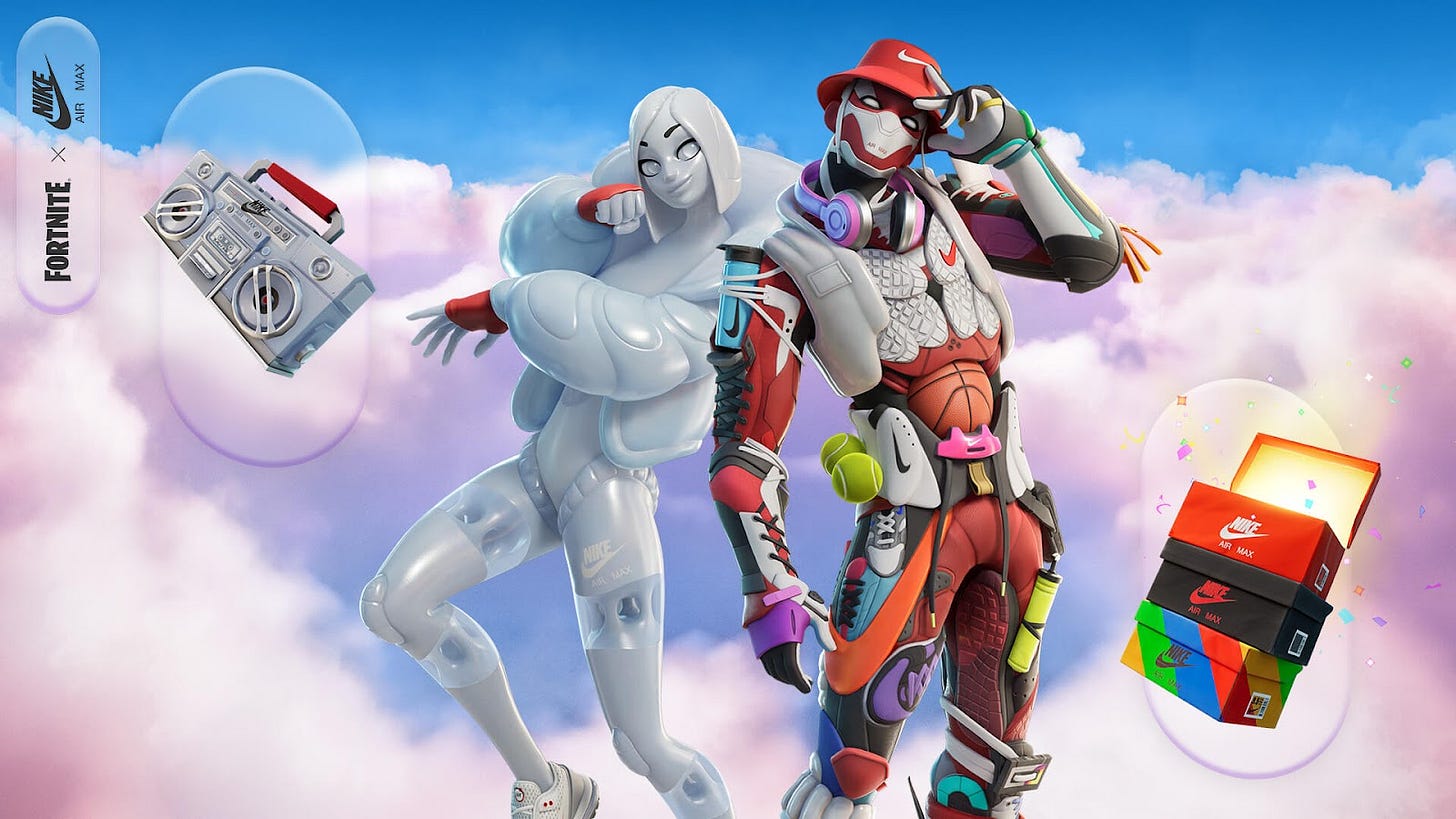
In Fortnite, cosmetics aren’t an afterthought. They’re central to the experience. Players spend real money to customize how they look, not because it helps them win, but because it helps them be seen. Epic’s leadership has said it plainly: Fortnite is fashion.
And the numbers back that up. Fortnite has generated tens of billions of dollars in revenue almost entirely through cosmetic purchases. Players routinely spend $100+ a year on skins, emotes, and accessories in a game that is otherwise free.

Roblox is an even more interesting case. Its daily active user count is enormous, and while the audience skews younger today, those users are growing up with digital self-expression as a given. They aren’t “trying on” virtual fashion as a novelty…it’s just how identity works in that space.
What really matters here isn’t just scale, but behavior. People don’t passively consume these worlds. They socialize in them. They show off. They develop reputations. And the clothes their avatars wear are part of that identity.
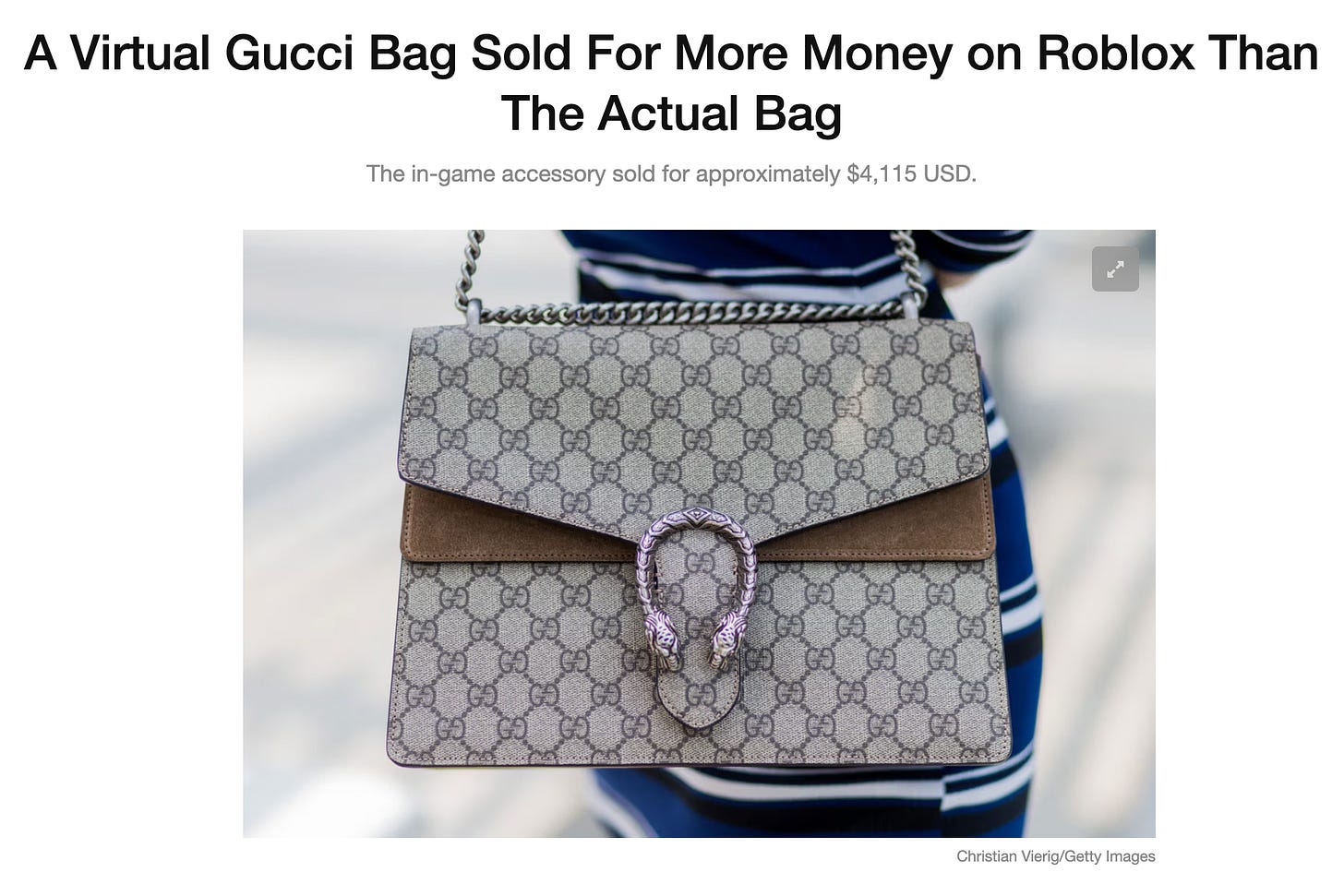
That’s why stories like the Gucci bag on Roblox don’t actually surprise me anymore. When a virtual accessory sells for more than its physical counterpart, it’s not because people are irrational. It’s because value is contextual. Inside that world, status and scarcity still matter — sometimes more than physical