Mar 15, 2026
Every Deep Dive series needs a little history lesson to help us under why the industry looks the way it does today.
When you open Cinema 4D, or you send renders into After Effects for compositing, your work makes so much sense when you realize that everything you are doing is part of a century of experimentation with moving graphics.
Motion graphics did not begin as a software category. It began as a creative idea.
What happens when graphic design starts moving?
To understand 3D motion graphics today, we have to go back to a time before computers were even involved.
In the 1920s and 1930s, filmmakers like Oskar Fischinger were creating what he called “visual music.” Instead of characters or stories, his films used geometric shapes moving rhythmically to sound.
by Oskar Fischinger
![Music For the Eyes [on Oskar Fischinger] | Jonathan Rosenbaum](https://substackcdn.com/image/fetch/$s_!Filo!,w_1456,c_limit,f_auto,q_auto:good,fl_lossy/https%3A%2F%2Fsubstack-post-media.s3.amazonaws.com%2Fpublic%2Fimages%2F98fdd381-2927-41fb-b1f8-d7f66758fdc8_800x404.gif)
Circles pulsed. Lines spun. Colors shifted with the beat.
If that sounds familiar, it should. The core idea behind motion graphics was already there. Graphic elements arranged in time.
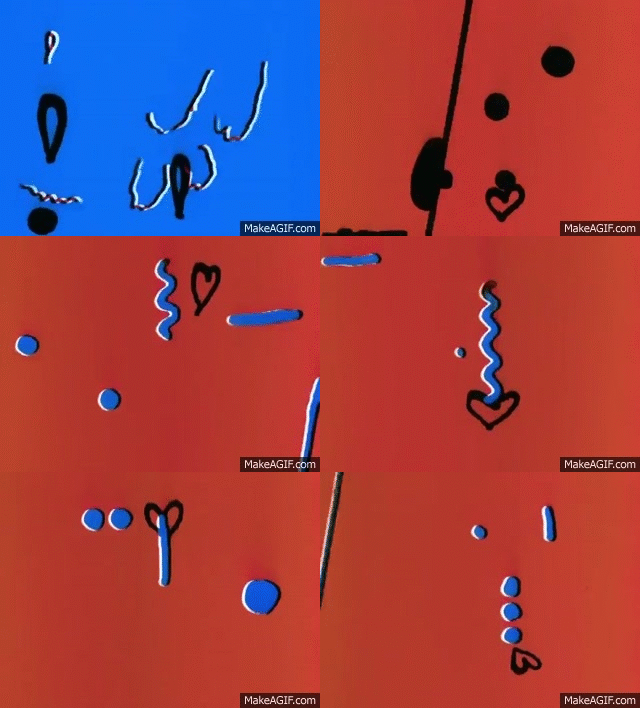
Experimental animator Norman McLaren at the National Film Board of Canada pushed things even further. McLaren sometimes painted or scratched directly onto film stock, effectively treating film itself as a programmable signal.
Norman McLaren